
fundamental designs

Search

How System 1 and 2 create biases together

System 1 and 2 are fundamentally different, but also complement each other well. They work together for many processes, with System 1 trying to unburden System 2 as much as possible. However, it doesn't always go right. And this is exactly how biases are formed.

how System 1 and 2 collaborate

The collaboration between System 1 and 2 is based on efficiency. System 1 is in control and operates on autopilot. System 2 waits patiently. As long as no help is requested from System 2, System 1 continues to handle all possible information as efficiently as possible. 

In many activities, we end up using both systems. System 1 takes on the bulk of the work and engages System 2 as needed. For example, consider how a practiced driver moves effortlessly through traffic (System 1), but has to think about the route to a new destination (System 2). Or how I sense that this sentence could be written better (System 1), but I need to analyze how to do this (System 2).

(Okay maybe my System 2 also lacks some quality because the sentence still doesn't flow optimally. If you can help, please send an email at mysystem2isbetterthanyoursystem2@solfem.nl

All the time, System 2 receives suggestions from System 1 in the form of impressions, intuitions, intentions and feelings. When System 2 accepts these, they become beliefs and voluntary actions. Usually this happens without any modifications. With this, System 1 has great influence over System 2's analytical view.
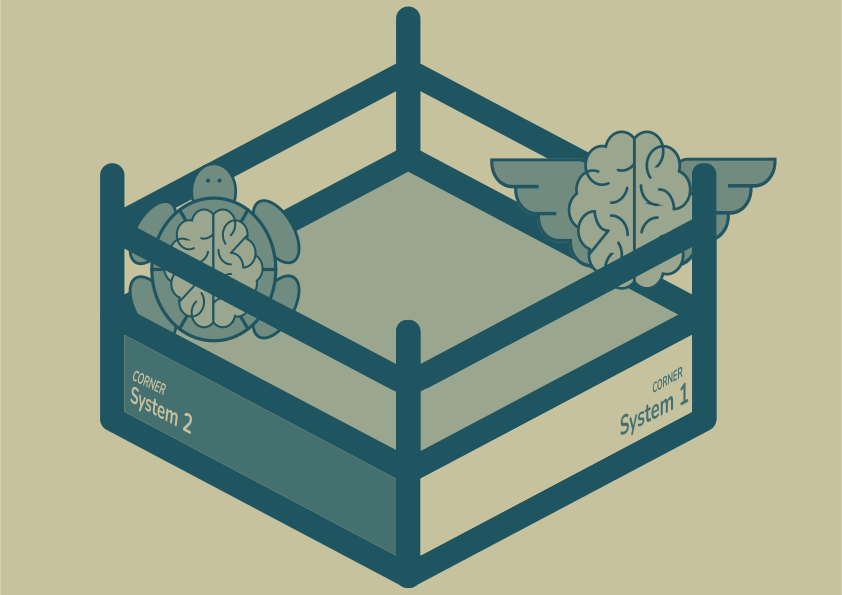

pick your favorite: System 1 or System 2

Boxing ring Systeem 1 en 2 (Vooroordelen)

In the left corner we have System 2.

In the right corner we have System 1.

Known for thorough analyses and careful solutions for complicated issues.

Known for quick reactions in all kinds of situations without using much energy.

System 2 is thoughtful.

System 1 is independent.

System 2 is deliberate.

System 1 operates completely automatically.

System 2 follows procedures.

System 1 sees differences.

Without System 2, you can never make really important decisions.

Without System 1 you will lose all your energy and your life slows down.

Make the right decision and choose System 2.

Make the right decision and choose System 1.

Who is your favorite, System 1 or System 2?

Bekijk resultaten

Loading ...

the creation of biases

System 1 operates efficiently. It uses rules of thumb for making decisions, both the simple and the complex. These rules of thumb, which are shaped by what you experience, determine how you see and experience the world. 

When System 1 thinks it recognizes a new situation, it processes it simply and quickly. Without thinking, you issue a response as you did with previous, similar situations. However, System 1 may misjudge that the new situation is actually different, issuing an incorrect response. 

When this happens, System 2 does not intervene. This is because System 1 thinks that System 2's help isn't needed. Since System 2 is lazy by nature, it does not automatically intervene and question System 1's judgment. It trusts System 2, but sometimes it is too gullible. 

Hence, biases can develop: 

1

In subsequent situations, you make the same thinking error and your reaction becomes a systematic error.

2

System 2 does not intervene and thereby accepts System 1's incorrect response.

3

A mistake by System 1 is not recognized by System 2

On the other hand, System 2 can also create biases. System 2 is actually just as vulnerable to make mistakes as System 1. For example, System 1 may gather the right information, but System 2 may process it poorly. This could occur as System 2 overthinks the situation or makes up questionable reasons to do actions anyway. For example, think of eating a large dessert when you've had a small portion of dinner.

the creation of biases

examples of biases

In the argument all the protagonists suffer from biases. The story features a selection of common biases. In this quiz, these biases are described. Can you connect the description with the right bias?

match the biases

Kies bij de omschrijving van het vooroordeel telkens de juiste optie.

when should you do something about your biases?

The creation of these biases may worry you. Making wrong decisions (systematically) is not exactly fun. 

Fortunately, mistakes don't often occur: System 1 is very good at what it does. You interpret familiar situations correctly, make accurate short-term predictions, and have good initial reactions. Nor are people irrational: they just don't always make optimal decisions on their own. 

To do this, we sometimes need help. System 2 can provide this help by challenging System 1. You need to recognize that you are making a mistake, slow down and seek help from System 2. 

However, System 1 does not easily allow itself to change its view of the world. To change your assumptions takes a lot of effort. Also, System 2 must avoid its own biases. 

As a result, it is impossible to avoid all biases. A compromise is needed: we only use System 2 for the important moments. But how do you do this properly?

In the next chapter, we will go into more detail on how to do this for cases that are both complex and important. 

when should you do something about your biases?

Shopping cart
Shopping cart is empty