When System 1 struggles, it asks for help from System 2. By following (learned) procedures and rules, you solve a problem with this system. You can also use System 2 to identify the differences between options, allowing you to make better choices. As a result, you can still solve complex questions.
For example, you use System 2 in the following situations:
1
Focusing on a specific voice in a busy environment
2
Parking in a small parking lot
3
Walking faster than you normally do
What the actions of System 2 have in common is that they take effort. Without focus, the task at hand can become very difficult to perform. This focus also causes you to close yourself off to your surroundings.
For most activities, both big and small, that you undertake, System 1 is in charge. You may feel that System 2 dominates your decisions, but System 1 is often in control. Psychologist Daniel Kahneman used a great metaphor in his book on the two systems, 'Thinking, Fast and Slow':
In the unlikely event of this book being made into a film, System 2 would be a supporting character who believes herself to be the hero.
System 2 comes into play only when an event is unsolvable for System 1. For example, to accomplish the task from the video, counting how many times the players in white passed the ball, it was necessary to engage System 2. This did have the consequence that there was no energy left for System 1 to recognize the gorilla.
Because of this, System 2 is lazy. It really doesn't want to take action if it doesn't have to. This allows System 1 to use the available energy quickly and efficiently. This laziness of System 2 is deeply built into us: it takes effort to activate System 2. But when System 2 becomes active, it also basically controls your response. In this process, System 2 still relies on System 1, as it often takes over ideas and feelings.
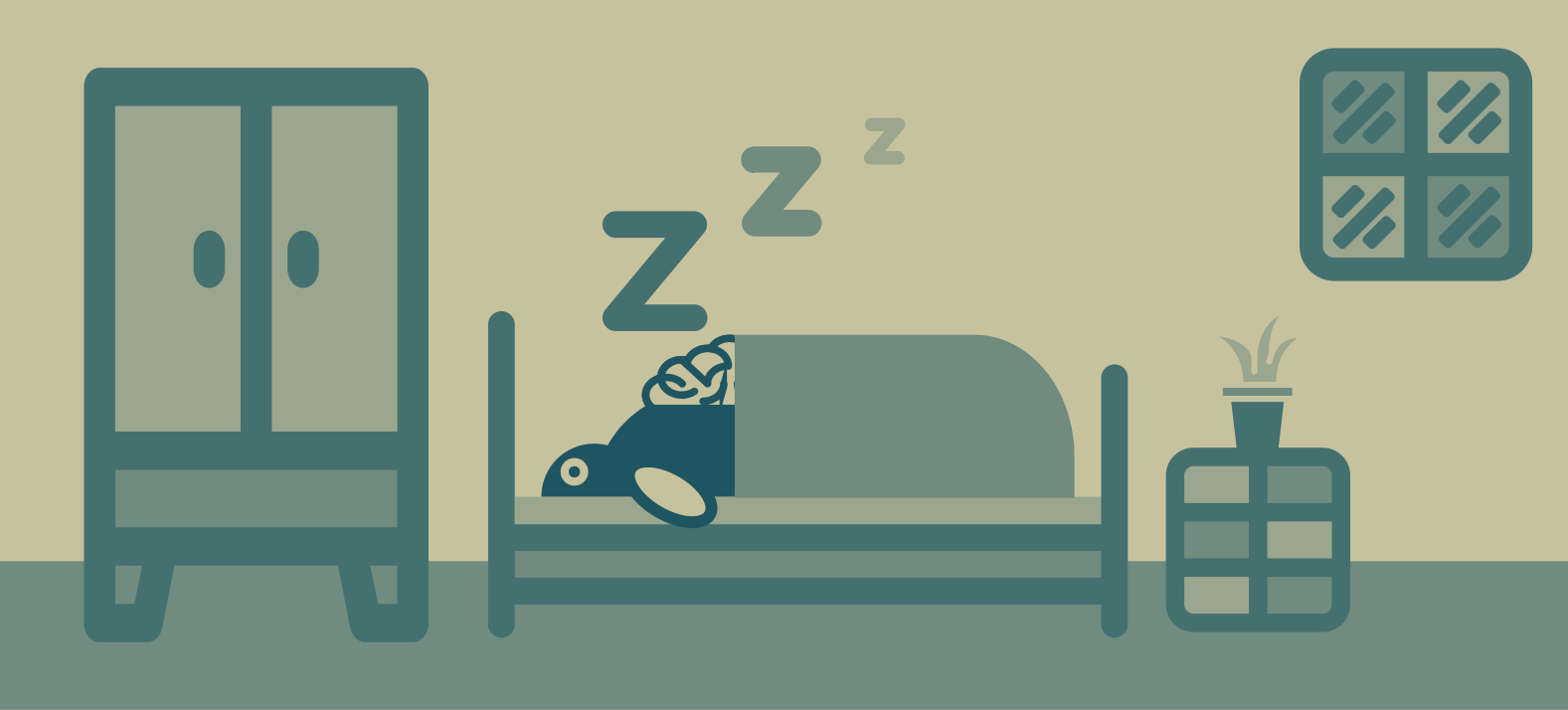
The laziness of System 2 visualized. What would you like to do?
We can give System 2, like System 1, a 'personality'. This collection of characteristics, shown in the table below, will give you a better idea of which actions belong to System 2.

Acts slowly, deliberately and infrequently.
Uses a lot of energy and has limited capacity


Author of the thoughts we have.
Intervenes when System 1 cannot solve the problem.


Follows rules and procedures.
Can make choices between different options.


Is careful and thoughtful.
Can reason, plan and make complex calculations.


Often takes suggestions from System 1 in the search for information and arguments.
Can resist suggestions from System 1 by slowing down and making analyses

You have been introduced to System 1 and 2. Now you know in broad terms how these systems function and affect your life. However, this is the theory: how does it work in practice?
Take the following short quiz. Try to answer the answers as quickly as possible. Afterwards, read the explanation below the quiz.
For each question, enter a number as the answer. So for example, 5 and not 'five'.
The questions come from, or are based on, the "Cognitive Reflection Test" created by psychologist Shane Frederick. The questions all have intuitive answers suggested by System 1, but these are not the right answers. To give the right answers, an activation of System 2 is required. For this, however, you must first realize that System 1's answers are wrong and why this is the case.
It is very humane to get the answers wrong, especially if you answered the quiz quickly. Even when people are reminded to think for longer about the questions, mistakes are still made. This shows that System 2 does not always intervene immediately when System makes a mistake.
Note: Do this addition in your head, do not use a pen or paper.
Take 1000 and add the following numbers:
What is the new total?
The answer is 4100. Many people end up with 5000. This is because of our brain's confusion with the decimal range. It jumps quickly to the highest decimal (100 instead of 10), causing you to calculate it incorrectly.
1. There are three sealed boxes in front of you. One contains a prize; the other two are empty. You don't know which box contains the prize.
2. You choose one box but don't open it yet.
3. Someone else, who knows which box contains the prize, removes one of the other two boxes. Two boxes remain: one of them contains the prize.
4. You now have two options: keep your own box and open it or choose the other box to open.
Which option do you choose?
The best option is to choose the other box. The probability that this contains the prize is twice as high. You may have thought that the probability was 50% and that it doesn't matter which option you choose. However, it does matter: let's explain it briefly here.
If you have two choices that you don't know anything about, you have a 50% chance of choosing the right one. However, in this example, you do have information. In fact, someone else, with knowledge of the contents of the boxes, has taken away a wrong choice. You have two options: pure guessing (keeping your own box) or going along with the other person's filtered choice (choosing the other box). You have more information about the latter option, making it more likely that the other box contains the prize.
Do you need more explanation? Take a look here, for example.
You've seen that you need both System 1 and System 2 to solve problems. Practice shows that this does not always go well. It can cause a wrong answer in a math exercise, but can also lead to biases. But how exactly are these biases created?
Find out in the next chapter how the cooperation of System 1 and 2 leads to biases.
Well, it was to be expected that this song would not provide much motivation for System 2 to take action.
Factually correct, System 2 is indeed indicated very blue in this image. System 2 is of course also a fan of structure. However, no effect on the activation of System 2.
At least this song produces enough sound. However, no effect on System 2 yet. Perhaps your System 1 has turned it off already. Let's move on with this chapter.