
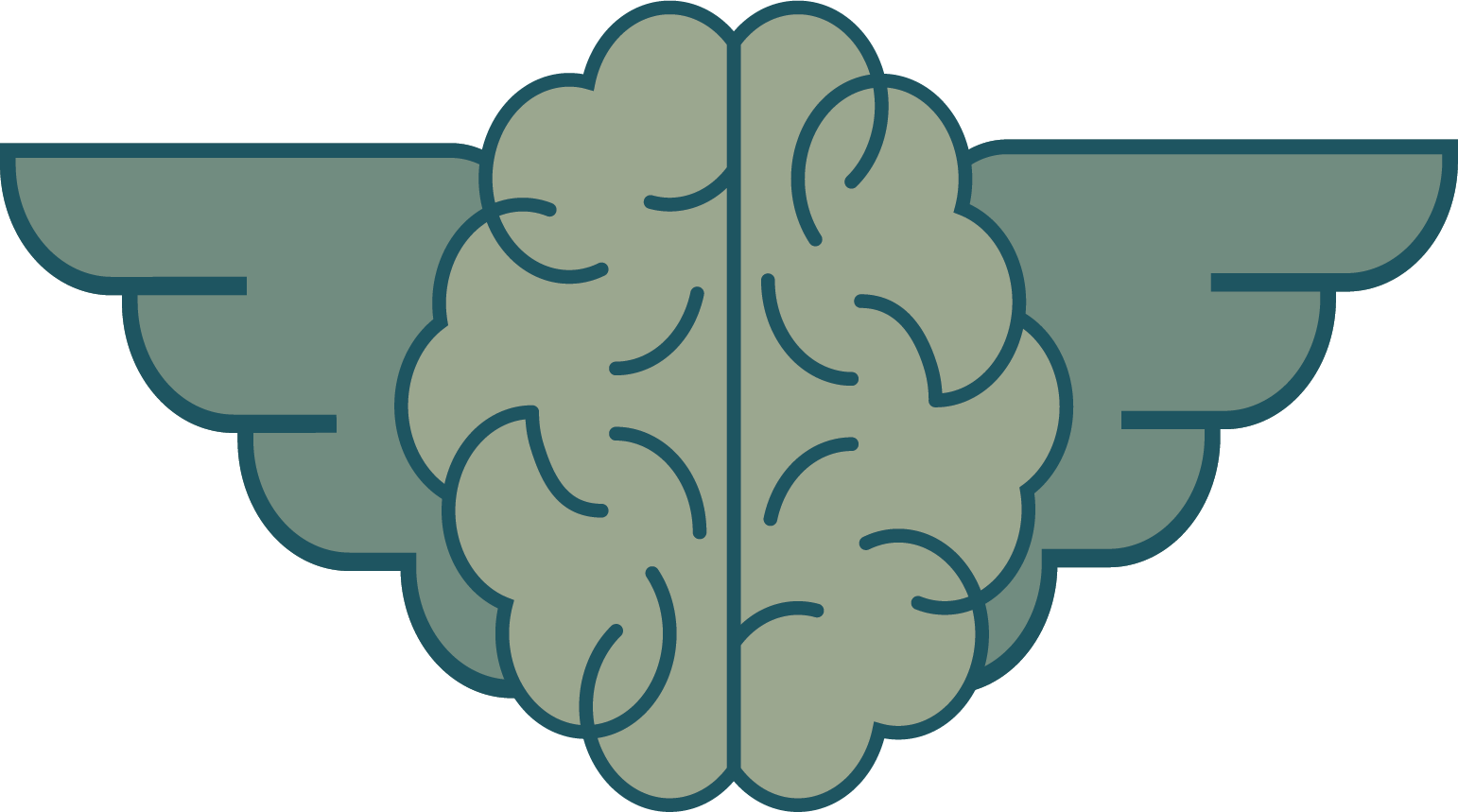
System 1 is your quick, automatic thinking. By relying on intuition and experience, you make decisions effortlessly. This happens without your conscious control. The vast majority of the choices you make every day occur this way. Thankfully, because only making conscious choices would take far too much energy and time.
System 1 has, like System 2 (see Chapter 2), no region in the brain that you can think of as its home. They are nicknames for processes that take place in your brain, but they aren't real entities. System 1 and 2 are fictional concepts, invented to better understand how the brain works.
Psychologists Keith Stanovich and Richard West first introduced the terms System 1 and System 2. Later, these terms gained greater prominence through the work of Amos Tversky and Daniel Kahneman. A simple name, rather than, say, "automatic system," was chosen because it takes less effort to remember.
Very good question. Find the answer to it below.
Sorry, won’t happen, I’m not that good in programming.
Busy, busy, busy.
No, but I wanted to keep it short.
No, but I wanted to keep it sho-
An important function of System 1 is to create a mental model of your personal world. In this model, you make connections between all the actions you do, people you meet and things you experience. These connections form a pattern of ideas that determines the structure of your life. New information is given an appropriate place in this model and reinforces relationships already made. The mental model determines how you interpret the present and what your expectations of the future are.
System 1 is impulsive and intuitive, but based on your reality. The more often something happens, the more dominant a connection becomes for you. System 1 creates the model of your life based on all experiences. It's personal, as it is based on everything you experience.
Already before the debate, Edible considers Prime Minister Marsh incompetent. Previous experiences, for example, other crises or wrong decisions, made Bastard believe that Premier Meer is not suited for her position. The crisis involving escaped frogs and toads reinforces this idea: System 1 places the new information in its existing mental model.
System 1 is good at making a coherent story of your life. That's nice, but coherent is not the same as correct. Facts that are difficult to fit into the model are easily skipped over. Information that you don't know can't undo wrong connections. System 1 makes the world simple and logical, not necessarily true.
Agile considers himself very smart. He used to be told this many times. He ignores criticism of his special voting method, as it doesn't fit his story: he is smart, so his voting method must also be brilliant. This turns out to be wrong, as the voting goes awry.
Your mood affects the operation of System 1. When you are in a negative mood, you lose some of your intuition. When you feel good, you lean more firmly on System 1. You become less alert and rely on your mental model.
An easy decision is nice. For example, if you know the answer to a question immediately, it makes you feel good. This reinforces System 1 thinking. If you have to think longer or deeper about an answer, you may start doubting yourself. You are challenging System 1, which can be less pleasant.
Prime Minister Marsh is, wrongly, optimistic about a good outcome of the debate. She has a quick and substantive response to every comment, mostly dictated by System 1. This makes her feel fine and confident of a good outcome. As she had also survived previous debates, she sees no reason for a different outcome now. She continues to lean on her System 1 thinking and is less alert to negative signals.
We can give System 1 a personality. It isn't human, it remains, of course, a super-fast flying brain with wings, but by personifying it we understand the concept better. A collection of characteristics, shown in the table below, will give you a better idea of what actions belong to System 1.

Acts automatically, quickly and independently
Creates impressions and feelings


Can estimate sizes and distances
Analyzes problems one by one


Is more sensitive to change than to specific values
Reacts more strongly to losses than to gains


Makes judgments based on standard values and examples
Provides competent reactions and intuitions


Ignores ambiguity and doubt
Focuses on available evidence and ignores absent evidence


Distinguishes the abnormal from the normal
Decides on causes and intentions

Don't panic, fortunately there is only one other system: System 2. It will be the main focus of the next chapter. For as much as we rely on System 1, can you answer the questions below without making an effort?
1
What is 344 x 153?
2
How many squares do you see?
2
2

2
52.532
Is this impossible? Welcome to the exclusive club of seven billion human earth dwellers for whom this is also true.
Could you do it straight away? In that case, take this quiz.
Did you manage to answer the questions, after some effort, correctly? Congratulations, you have made System 2 work! Find out exactly how this system works in the next chapter.